Looking for a freelance AI developer?
I build AI features into real products. Not prototypes — features that stay switched on after launch, because they were evaluated against real inputs before they shipped.
The hard part of an AI feature was never the model call. It's what you feed it, what you accept back, what the user sees when it's wrong, and what it costs at a thousand times the volume you tested. That's engineering work, and it's where most AI projects quietly fail.
- 8+
- Years experience
- 106
- Happy clients
- 100%
- Job success
- 5
- Industries
What you can hire me for
- AI feature scoping — including an honest read on whether an LLM is the right tool
- RAG pipelines: chunking, embeddings, retrieval and citation
- Chatbots and assistants with human escalation paths
- Evaluation sets and regression checks so quality is measured, not guessed
- Cost and latency optimisation — caching, model routing, streaming
- Full-stack integration into React, Next.js or Angular products
Tools
Why work with me on ai & llm
Evaluation before prompting
30–50 real inputs with known-good outputs, written down before any tuning. Without it you can't tell whether a prompt change helped or just moved the failures somewhere you weren't looking.
Structured output, validated
When a feature drives UI or writes to a database, it gets a schema and a parse step. A whole class of vague failures becomes one explicit branch you can handle.
Failure states designed on purpose
Timeouts, fallbacks, cited sources and one-click correction. If you don't design what happens when the model is wrong, you ship a confident wrong answer with no way out.
Cost modelled before launch
Cost per action times realistic volume, decided deliberately — cache the repeats, route the routine path to a smaller model, reserve the expensive one for cases that need it.
Full-stack, not just the prompt
The feature needs auth, queues, storage, rate limits and a UI. I build those too, which is usually the difference between a notebook and a product.
Straight answers about fit
Some problems are a database query wearing a costume. If an LLM is the wrong tool for what you're describing, I'll tell you before you pay for one.
What I build
RAG over your own content
Support docs, contracts or a product catalogue made answerable — with citations back to the source passage, so answers can be verified rather than trusted.
Support and sales assistants
Chat that knows your product, escalates cleanly to a human, and logs every exchange as tomorrow's evaluation set.
Extraction and classification
Turning unstructured input — emails, PDFs, form text — into typed rows your existing systems can act on.
AI inside an existing product
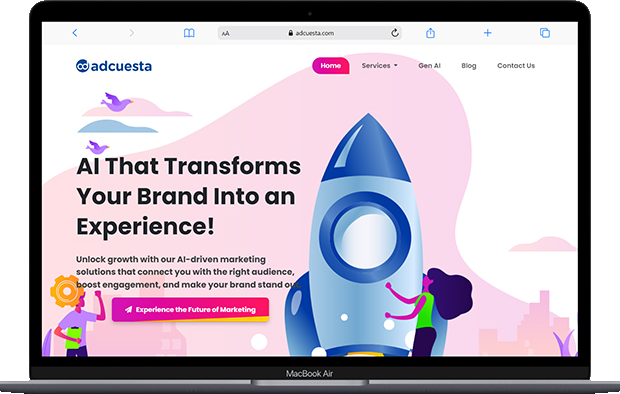
Adding a feature to software that already has users, without destabilising what already works. Adcuesta's Gen AI area is this shape.
Shipped, not theoretical
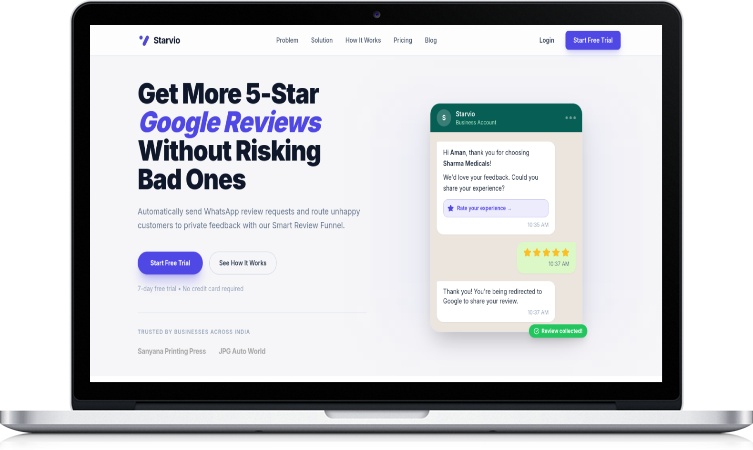
“Sunil has strong skills in IONIC Development and I like his sincerity and smart work skills. I strongly recommend him and will hire him for sure for next tasks or projects.”
“Sunil is a very good developer. He finished projects successfully and incorporated the feed back provided. I would certainly come back to him with more work for him in future.”
How the work runs
Discovery
Understand your goals, users, and what success actually looks like.
Strategy
Scope, architecture and a plan that fits your timeline and budget.
Design
Wireframes to polished UI — validated before a line of code ships.
Build
Fast, tested, well-documented development in weekly increments.
Ship
Deploy, monitor, and hand off a product your team can run.
Questions people ask first
How much does an AI feature cost to build?
Build cost depends on scope, but the question people forget is the running cost. I estimate cost per action against realistic volume during scoping, so you approve a number that includes month six — not just the build.
How do you stop it hallucinating?
You reduce it and you design around it. Retrieval grounds answers in your own content, structured output constrains the shape, and citations let the user verify. Then an evaluation set tells you the actual failure rate instead of your impression of it.
Which models do you use?
Whichever fits the task, the budget and your data-residency constraints — that decision belongs in scoping, not in a sales page. The architecture I build keeps the provider swappable, because this market changes every few months.
Is my data used for training?
Not by me, and provider settings are configured so it isn't by them either. If you have compliance requirements, they go into the scope document before anything is built.
Can you add AI to my existing app?
Yes, and that's the more common request. It starts with a look at the codebase and the data you have, because the quality of an AI feature is mostly determined by what you can retrieve, not by the prompt.
Tell me what you're building
Send over the scope — or the rough idea — and I'll come back with an honest read on approach, timeline and cost. No obligation, and no sales sequence.