Need a freelance full-stack developer?
I'm Sunil — 8+ years building web products, 100+ clients, and a 100% Job Success Score as a Top Rated developer on Upwork. Full-stack here means what it says: I design the data model, build the API, write the interface, and ship it to production.
The reason clients hire one full-stack developer instead of a front-end and a back-end contractor is rarely cost. It's that nothing falls into the gap between them — no waiting on an endpoint that doesn't match the screen, no arguing about whose bug it is.
- 8+
- Years experience
- 106
- Happy clients
- 100%
- Job success
- 5
- Industries
What you can hire me for
- Discovery and technical scoping, delivered as a document you own
- Full product builds — schema, API, interface, deploy and monitoring
- API development in Node.js, NestJS and Express with Postgres, MongoDB or Firebase
- Front ends in React, Next.js, Angular or Vue
- Legacy modernisation and incremental migrations
- Fractional senior developer inside an existing team
Tools
Why work with me on full-stack
One person owns the outcome
No integration gap between front end and back end, because there's no handoff. The thing either works end to end or it doesn't, and it's mine either way.
Framework-agnostic, on purpose
React, Next.js, Angular and Vue in production across six shipped products. I pick what fits your team and your hiring plan, not what I feel like using.
Data model first
Most expensive rewrites trace back to a schema decided in a hurry. I get that right early, in writing, before any UI is built on top of it.
Weekly deployed increments
A live link and three lines of what changed, every week. Misunderstandings get caught while they're an hour of work rather than a fortnight.
Documented handover
Setup, architecture, deploy and gotchas, written down. You're hiring a developer, not taking out a subscription to one.
Still here after launch
Launch is the middle of the project. Retainers for maintenance, iteration and the small things that only surface once real users arrive.
What I build
MVPs that survive contact
Built to be extended rather than thrown away when the idea gets traction — auth, payments, admin and analytics from the start.
Two-sided marketplaces
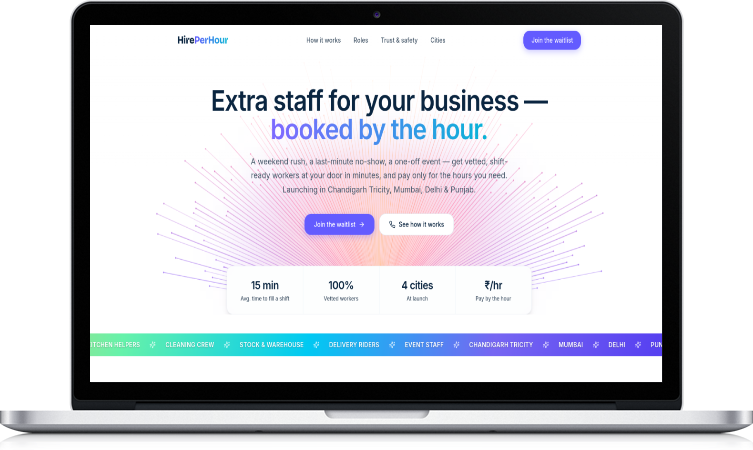
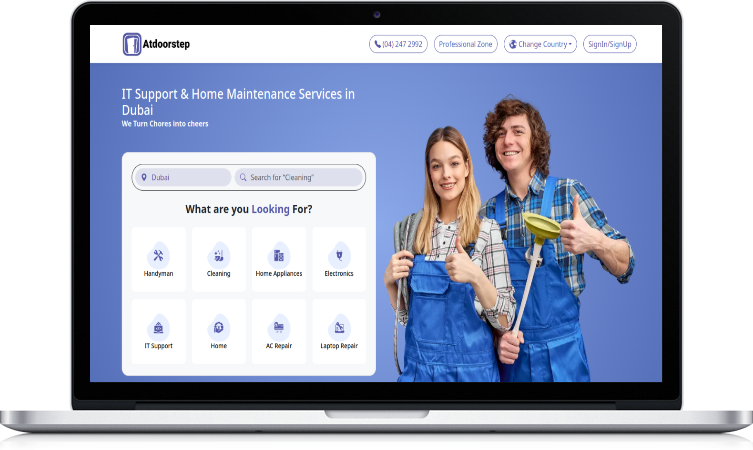
Supply, demand, matching, ratings and payouts. HirePerHour and Atdoorstep are both this shape.
Internal tools and dashboards
The unglamorous software your team runs on — roles, permissions, exports and audit trails that operations actually trust.
Legacy modernisation
jQuery, old Angular or an inherited codebase moved forward incrementally, with the business running throughout.
Shipped, not theoretical
“Sunil has strong skills in IONIC Development and I like his sincerity and smart work skills. I strongly recommend him and will hire him for sure for next tasks or projects.”
“Sunil is a very good developer. He finished projects successfully and incorporated the feed back provided. I would certainly come back to him with more work for him in future.”
How the work runs
Discovery
Understand your goals, users, and what success actually looks like.
Strategy
Scope, architecture and a plan that fits your timeline and budget.
Design
Wireframes to polished UI — validated before a line of code ships.
Build
Fast, tested, well-documented development in weekly increments.
Ship
Deploy, monitor, and hand off a product your team can run.
Questions people ask first
What does a full-stack developer actually do?
Everything between the database and the browser: the data model, the server-side logic and API, the interface users see, and the deployment that puts it online. On a small team it means one person can take a feature from idea to production without waiting on anyone.
Should I hire a freelancer or an agency?
An agency makes sense when you need several disciplines in parallel and have the budget for account management. A freelancer makes sense when you want the person writing the code to be the person you talk to. If your project genuinely needs a team of five, I'll say so.
How do you charge?
Fixed price for work that's been scoped, time-and-materials with an agreed cap for the parts that genuinely can't be estimated until we're inside them. Exclusions go in the proposal in writing, which is where most disputes actually come from.
How do we start?
A short call about your goals, then a written scope and timeline. Most projects kick off within a few days of that.
Do you take over half-finished projects?
Often. The first step is a paid code review that tells you honestly what's salvageable and what isn't — sometimes the answer is that finishing costs more than restarting, and you should hear that before you spend more.
Tell me what you're building
Send over the scope — or the rough idea — and I'll come back with an honest read on approach, timeline and cost. No obligation, and no sales sequence.